
Makkah Ziyarat Guide
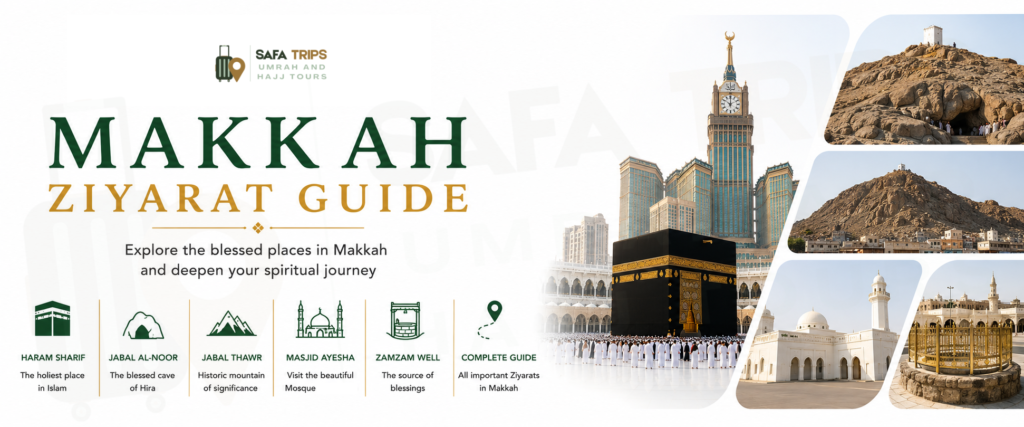
A Makkah Ziyarat Guide helps pilgrims understand the important Islamic and historical places around Makkah before or after performing Umrah. Ziyarat means visiting sacred, historical, and meaningful places with respect. It is not a compulsory part of Umrah, but many pilgrims visit these places to learn more about Islamic history and feel closer to the journey of faith.
For Indian pilgrims, Makkah Ziyarat can feel confusing without proper planning. You may not know which places to visit, how much time is needed, what transport to use, what elderly pilgrims should avoid, and how to manage Ziyarat without missing prayers at Masjid al-Haram.
That is why SafaTrips helps pilgrims plan Makkah Ziyarat in a simple and organized way. Whether you are travelling with family, senior citizens, children, women-only groups, or first-time Umrah pilgrims, proper Ziyarat planning can make your journey smoother and more peaceful.
Makkah is not only the city of the Holy Kaaba. It is also connected with many important events from the life of Prophet Muhammad ﷺ, the early Muslims, and the history of Hajj and Umrah. Places like Jabal al-Noor, Cave Hira, Jabal Thawr, Mina, Arafat, Muzdalifah, Jannat al-Mualla, and Masjid Aisha are commonly included in Makkah Ziyarat tours.
Jabal al-Noor and Cave Hira are among the most known places in Makkah because of their connection with the first revelation of the Quran. Discover Makkah notes that Jabal al-Noor is around 4 km northeast of Masjid al-Haram and is closely linked with the Prophetic biography. The official Nusuk platform also provides guidance and information for Hajj and Umrah visitors, including Makkah and Madinah travel support.
If you are planning Umrah with SafaTrips, Ziyarat can be added with complete travel planning, including visa support, hotels, transfers, flights, and guidance. You can also explore our Ziyarat Tour Services for a more organized visit.
What Is Makkah Ziyarat?
Makkah Ziyarat means visiting important religious and historical places in and around Makkah. These places remind pilgrims of Islamic history, sacrifice, patience, faith, and the life of Prophet Muhammad ﷺ.
Ziyarat is different from Umrah. Umrah has specific rituals like Ihram, Tawaf, Sa’i, and shaving or trimming hair. Ziyarat is a visit for learning, reflection, and spiritual connection. It should be done with respect and correct intention.
Many pilgrims include Makkah Ziyarat because it helps them understand the history behind many places they have heard about since childhood. When a pilgrim sees Jabal al-Noor, Cave Hira, Mina, or Arafat, the stories become more real and meaningful.
SafaTrips always guides pilgrims that Ziyarat should not disturb the main purpose of the journey. Prayer at Masjid al-Haram, Umrah rituals, rest, health, and family comfort should remain the first priority.
Why Makkah Ziyarat Is Important for Umrah Pilgrims
Makkah Ziyarat is important because it helps pilgrims connect knowledge with experience. Many Muslims know about the first revelation, Hijrah, Hajj places, and early Islamic struggles. But when they visit these places in Makkah, they understand the journey more deeply.
For first-time pilgrims, Ziyarat also gives a better idea of Makkah city. They understand different areas, roads, distances, and travel time. This is useful for families and groups who want a more complete Umrah experience.
For children and young pilgrims, Ziyarat can be a simple learning journey. Instead of only reading about Islamic history, they can see the places and ask questions. This makes the trip more meaningful.
For senior citizens, Ziyarat should be planned carefully. Some places may involve climbing, walking, heat, or long waiting. SafaTrips helps elderly pilgrims choose comfortable Ziyarat options without unnecessary difficulty.
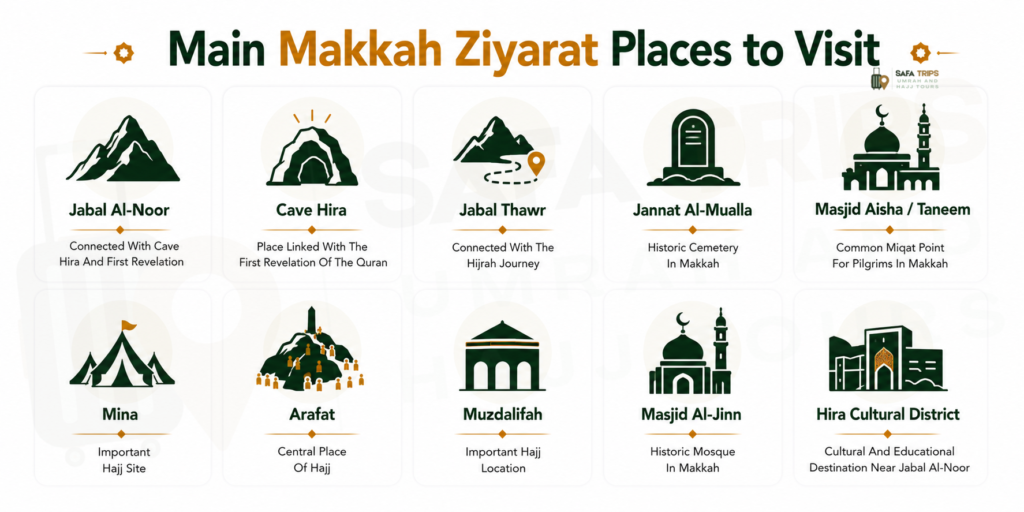
Main Makkah Ziyarat Places to Visit
Below is a simple table of common Makkah Ziyarat places. Final access, timing, route, and visit options may depend on local rules, crowd levels, weather, and transport availability.
| Ziyarat Place | Why It Is Important | Suitable For |
|---|---|---|
| Jabal al-Noor | Connected with Cave Hira and first revelation | History-focused pilgrims |
| Cave Hira | Place linked with the first revelation of the Quran | Physically fit pilgrims |
| Jabal Thawr | Connected with the Hijrah journey | History-focused pilgrims |
| Jannat al-Mualla | Historic cemetery in Makkah | Most pilgrims |
| Masjid Aisha / Taneem | Common Miqat point for pilgrims in Makkah | Umrah pilgrims |
| Mina | Important Hajj site | Hajj and history learners |
| Arafat | Central place of Hajj | Hajj and Umrah pilgrims |
| Muzdalifah | Important Hajj location | Hajj and history learners |
| Masjid al-Jinn | Historic mosque in Makkah | Pilgrims interested in history |
| Hira Cultural District | Cultural and educational destination near Jabal al-Noor | Families and learners |
Visit Saudi describes Hira Cultural District as a cultural and spiritual destination at the foot of Jabal al-Noor, with educational and cultural experiences for visitors.
Jabal al-Noor and Cave Hira
Jabal al-Noor is one of the most famous Ziyarat places in Makkah. It is also known as the Mountain of Light. Cave Hira is located on this mountain. This place is deeply connected with the first revelation of the Quran.
Many pilgrims feel emotional when they see Jabal al-Noor because it reminds them of the early days of Islam. The place teaches patience, reflection, and devotion.
However, pilgrims should know that climbing to Cave Hira can be physically difficult. The path can be steep and tiring. Senior citizens, heart patients, people with breathing problems, pregnant women, and pilgrims with knee pain should avoid climbing unless they are medically fit.
A better option for many pilgrims is to visit the area near Jabal al-Noor, see the mountain from below, and learn about its history. Hira Cultural District near the mountain is also a useful place for families who want a more comfortable educational visit.
SafaTrips usually suggests that pilgrims should not force themselves to climb. Ziyarat should bring peace, not health risk.
Jabal Thawr
Jabal Thawr is another important mountain in Makkah. It is connected with the Hijrah journey of Prophet Muhammad ﷺ and Abu Bakr رضي الله عنه. Many pilgrims visit this place to remember the trust, patience, and courage shown during that time.
Like Jabal al-Noor, this place also involves physical difficulty if someone tries to climb. Most pilgrims visit the area, listen to the historical explanation, and continue the Ziyarat route.
Families with children and seniors should be careful. It is better to take guidance before deciding how much walking or climbing is suitable.
Jannat al-Mualla
Jannat al-Mualla is a historic cemetery in Makkah. It is one of the well-known Ziyarat places for pilgrims. Many important personalities from early Islamic history are associated with this cemetery.
Pilgrims should visit this place with respect and calm behavior. It is not a tourist spot for noise, photos, or crowding. The visit should remind us of the temporary nature of life and the importance of good deeds.
Simple manners at Jannat al-Mualla include staying quiet, avoiding pushing, following local rules, not blocking pathways, and keeping the visit short and respectful.
Masjid Aisha / Masjid Taneem
Masjid Aisha, also known as Masjid Taneem, is a well-known Miqat point for pilgrims who are already in Makkah and want to enter Ihram for another Umrah.
Many pilgrims visit Masjid Aisha during their Makkah stay. Some go there only for Ziyarat, while others go there to wear Ihram and perform another Umrah.
Before planning another Umrah, pilgrims should check their health, time, and energy. Doing too much in a short time can make the body tired. SafaTrips helps pilgrims plan their schedule in a balanced way so they can perform worship peacefully.
If your main need is transport between airport, hotel, Miqat, and Ziyarat places, SafaTrips can also help with Private Transport Services based on your family size and comfort needs.
Mina, Arafat, and Muzdalifah
Mina, Arafat, and Muzdalifah are mainly connected with Hajj. But many Umrah pilgrims also visit these areas during Makkah Ziyarat to understand the Hajj journey.
Arafat is one of the most important places of Hajj. Standing at Arafat is a central part of Hajj. Mina is connected with Hajj stay and rituals, and Muzdalifah is where pilgrims spend time during Hajj after Arafat.
For Umrah pilgrims, visiting these places helps them understand how Hajj is performed. It is especially useful for those who may plan Hajj in the future.
These places are usually visited by vehicle. The route and access may depend on local rules and season. During Hajj time, movement rules are very different, so visitors should always follow official guidance and local instructions.
If you are planning Hajj in the future, you can also read our Hajj Guide for better understanding.
Masjid al-Jinn
Masjid al-Jinn is another historic mosque in Makkah. It is often included in Makkah Ziyarat routes. Pilgrims visit it because of its historical importance.
The visit is usually short. Pilgrims should keep the same manners as other sacred places: pray if possible, avoid crowding, respect local rules, and do not treat the place like a photo stop.
Hira Cultural District
Hira Cultural District is a newer and more organized destination near Jabal al-Noor. It is useful for pilgrims who want to learn about the history connected with Cave Hira in a more comfortable way.
The official Hira District website describes it as a destination at the foot of Mount Hira with exhibitions, museums, and experiences that help visitors understand the story of the first revelation.
This can be a good option for families, children, and elderly pilgrims who may not be able to climb Jabal al-Noor. It gives a learning experience without pushing the body too much.
Suggested Makkah Ziyarat Route
A simple Makkah Ziyarat route may cover important places in a half-day trip. The final route depends on hotel location, traffic, prayer timings, weather, and group size.
| Suggested Stop | Visit Type | Time Needed |
|---|---|---|
| Jannat al-Mualla | Short respectful visit | 15–25 minutes |
| Jabal al-Noor | View and explanation | 20–40 minutes |
| Hira Cultural District | Optional learning visit | 1–2 hours |
| Jabal Thawr | View and explanation | 20–30 minutes |
| Mina | Drive-through or short stop | 20–30 minutes |
| Arafat | Short stop | 20–40 minutes |
| Muzdalifah | Drive-through or short stop | 15–25 minutes |
| Masjid Aisha | Miqat visit if needed | 30–60 minutes |
This is only a sample route. Some pilgrims prefer a shorter route because they want more time for prayers in Masjid al-Haram. Some families want a slower route because they have children or elderly parents.
SafaTrips helps pilgrims create a practical Ziyarat plan instead of rushing from one place to another.
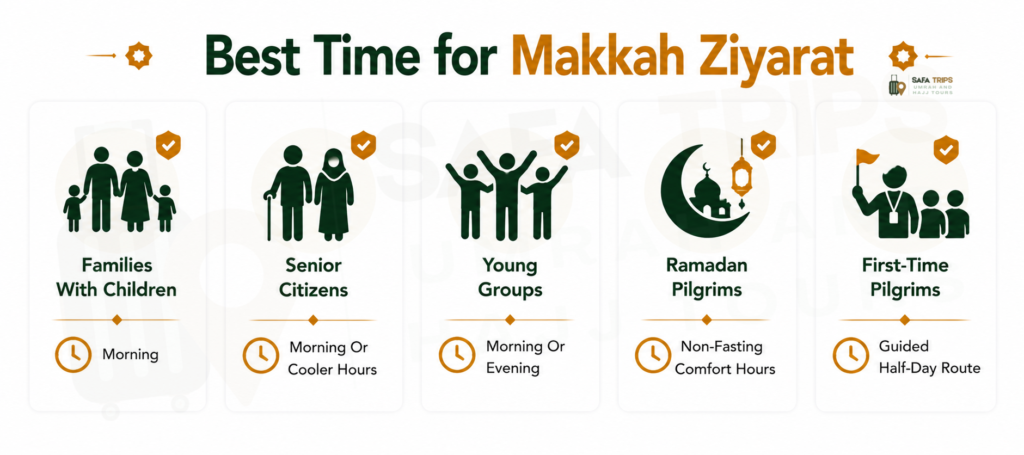
Best Time for Makkah Ziyarat
The best time for Makkah Ziyarat is usually morning or late afternoon, depending on weather and prayer schedule. Midday heat can be difficult, especially for Indian pilgrims who are not used to Saudi weather.
During summer, pilgrims should avoid long outdoor visits in the afternoon. During Ramadan, Ziyarat planning needs extra care because prayer time, fasting, crowd levels, and rest time are all important.
A good Ziyarat plan should not make pilgrims too tired before Umrah or important prayers. The goal is to learn and reflect, not to exhaust the body.
For many pilgrims, the best plan is:
| Pilgrim Type | Better Ziyarat Time | Reason |
|---|---|---|
| Families with children | Morning | Children are less tired |
| Senior citizens | Morning or cooler hours | Less heat and less fatigue |
| Young groups | Morning or evening | More flexibility |
| Ramadan pilgrims | Non-fasting comfort hours | Energy management |
| First-time pilgrims | Guided half-day route | Easy understanding |
How Much Time Is Needed for Makkah Ziyarat?
Most Makkah Ziyarat tours take around 3 to 5 hours if planned as a half-day trip. A shorter route may take around 2 to 3 hours. A longer route with Hira Cultural District, more stops, and slower movement may take more time.
The time depends on:
| Factor | How It Affects Ziyarat |
|---|---|
| Hotel location | Far hotels may increase travel time |
| Traffic | Busy roads can delay the route |
| Crowd level | Popular places may take longer |
| Group size | Large groups move slowly |
| Senior citizens | More rest time may be needed |
| Weather | Heat can reduce outdoor time |
| Prayer timings | Route should be planned around Salah |
| Climbing choices | Climbing mountains adds more time and effort |
SafaTrips suggests keeping Ziyarat simple and peaceful. It is better to visit fewer places properly than to rush through many places without understanding them.
Makkah Ziyarat for Families
Families should plan Ziyarat carefully because every member has different needs. Children may get tired or hungry. Parents may need rest. Senior citizens may need easier walking and comfortable transport.
For family Ziyarat, it is better to choose a private or well-managed vehicle. This gives more control over timing, stops, and comfort.
Families should carry water, light snacks, basic medicines, prayer mats if needed, and comfortable footwear. They should also keep children close, especially in crowded areas.
SafaTrips helps families plan Makkah Ziyarat as part of complete Umrah packages. If you are travelling with parents, children, or relatives, you can also explore our Family Umrah Packages.
Makkah Ziyarat for Senior Citizens
Senior citizens need a slower and more comfortable Ziyarat plan. They should avoid unnecessary climbing and long standing. Places like Jabal al-Noor and Jabal Thawr can be viewed from below instead of climbing.
A good senior-friendly Ziyarat plan should include:
| Need | Recommended Support |
|---|---|
| Less walking | Vehicle-based route |
| Heat protection | Morning or cooler timing |
| Health care | Carry medicines and water |
| Easy movement | Avoid steep climbs |
| Rest time | Short stops and relaxed schedule |
| Family support | Keep one person with the senior |
| Clear guidance | Explain each place simply |
SafaTrips gives special attention to elderly pilgrims because Umrah and Ziyarat should be peaceful, not stressful. For seniors, comfort is not a luxury. It is a need.
What to Wear During Makkah Ziyarat
Pilgrims should wear modest, comfortable, and weather-friendly clothing during Ziyarat. Since Makkah can be hot, light and breathable clothing is helpful.
Men should wear simple modest clothes if they are not in Ihram. Women should wear comfortable modest clothing, such as abaya or loose clothing, with proper hijab. Footwear should be comfortable because some places may require walking.
If a pilgrim is going to Masjid Aisha for Ihram, they should carry Ihram clothes and prepare properly.
Avoid heavy bags, tight shoes, and unnecessary items. Keep the journey light.
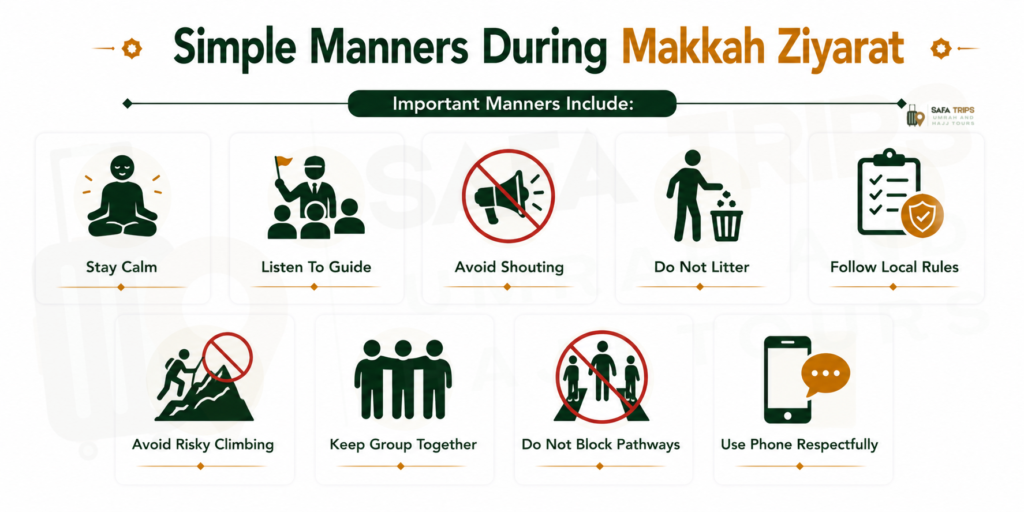
Simple Manners During Makkah Ziyarat
Ziyarat should be done with respect. These places are connected with faith and history, so pilgrims should avoid careless behavior.
Important manners include:
| Good Manners | Why It Matters |
|---|---|
| Stay calm | Keeps the visit peaceful |
| Listen to guide | Helps you understand the place |
| Avoid shouting | Respects other pilgrims |
| Do not litter | Keeps sacred areas clean |
| Follow local rules | Avoids trouble |
| Avoid risky climbing | Protects your health |
| Keep group together | Prevents confusion |
| Do not block pathways | Helps other visitors |
| Use phone respectfully | Avoids turning Ziyarat into sightseeing only |
A respectful visit brings more benefit to the heart.
Common Mistakes to Avoid During Makkah Ziyarat
Many pilgrims make mistakes because they do not plan properly. These mistakes can create tiredness, delays, or confusion.
One common mistake is trying to visit too many places in one day. This makes the journey rushed and tiring. Another mistake is climbing mountains without checking health condition. Some pilgrims also forget water, medicines, or comfortable footwear.
Some pilgrims plan Ziyarat right before or right after Umrah when the body is already tired. This can be difficult, especially for seniors and children.
Another mistake is booking transport without clear details. Pilgrims should know what is included, how many places will be covered, how much time is allowed, and whether the vehicle is shared or private.
SafaTrips helps pilgrims avoid these mistakes by planning Ziyarat with hotel location, prayer timing, health needs, and transport comfort in mind.
Makkah Ziyarat With SafaTrips
SafaTrips helps Indian pilgrims enjoy a guided and organized Makkah Ziyarat experience. We understand that many pilgrims are visiting Saudi Arabia for the first time. They may not know local routes, language, transport options, or the best timing for visits.
Our team helps you plan Ziyarat as part of your complete Umrah journey. This means you do not have to manage everything separately. Visa, flights, hotels, transfers, Ziyarat, and support can be planned together.
SafaTrips can help with:
| Support Area | How SafaTrips Helps |
|---|---|
| Ziyarat planning | Helps choose important places |
| Transport | Shared or private options based on package |
| Family comfort | Better route planning for children and elders |
| Senior support | Avoids difficult walking where possible |
| Timing | Plans around prayer and rest |
| Hotel coordination | Matches Ziyarat with Makkah stay |
| Guidance | Simple explanation for first-time pilgrims |
| Complete Umrah support | Visa, flight, hotel, transfer, and Ziyarat planning |
Our Umrah packages start from ₹1,09,990 for a 15 Days Value Plan, with better comfort options at ₹1,34,990 Deluxe Plan and ₹1,65,990 Dedicated Travel Expert Plan. Prices may increase based on travel month, airline fare, hotel distance, room sharing, direct flight availability, Ramadan demand, hotel category, transport type, meals, and Saudi service updates.
For pilgrims who want a complete guided journey, our Customized Umrah Packages can help create a plan based on your family, budget, hotel choice, and Ziyarat needs.
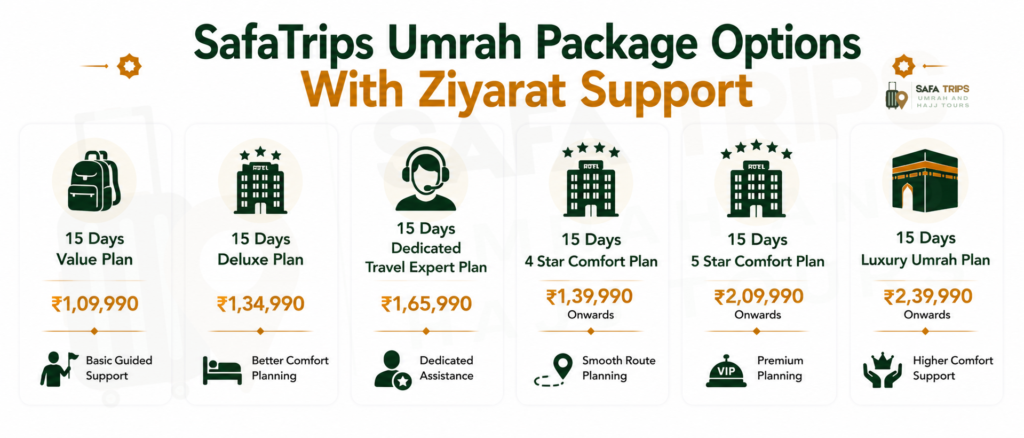
SafaTrips Umrah Package Options With Ziyarat Support
| Package Option | Starting Price | Best For | Ziyarat Support |
|---|---|---|---|
| 15 Days Value Plan | ₹1,09,990 | Budget-conscious pilgrims | Basic guided support |
| 15 Days Deluxe Plan | ₹1,34,990 | Families and first-time pilgrims | Better comfort planning |
| Dedicated Travel Expert Plan | ₹1,65,990 | Seniors, private families, VIP support seekers | Dedicated assistance |
| 4 Star Comfort Plan | ₹1,39,990 onwards | Pilgrims wanting better hotels | Smooth route planning |
| 5 Star Comfort Plan | ₹2,09,990 onwards | Comfort-focused pilgrims | Premium planning |
| Luxury Umrah Plan | ₹2,39,990 onwards | Families, couples, seniors, VIP pilgrims | Higher comfort support |
If hotel comfort is important for your family, you can also explore 4 Star Umrah Packages or 5 Star Umrah Packages based on your budget and comfort level.
Makkah Ziyarat and Hotel Location
Hotel location can affect your Ziyarat experience. If your hotel is close to Masjid al-Haram, it may be easier to manage prayer times and rest. If your hotel is far, travel time may increase.
A good hotel location helps pilgrims return after Ziyarat without too much delay. This is important for senior citizens and families.
Before booking, pilgrims should ask:
| Question | Why It Matters |
|---|---|
| How far is the hotel from Haram? | Affects daily prayer movement |
| Is transport included? | Helps avoid confusion |
| Is Ziyarat included? | Avoids last-minute planning |
| Is the room suitable for family? | Improves comfort |
| Are meals included? | Helps seniors and children |
| Is private transport available? | Useful for families |
| Is the hotel suitable for elders? | Reduces walking difficulty |
SafaTrips helps pilgrims choose hotel and Ziyarat plans together so the journey feels more organized.
Should You Choose Shared or Private Ziyarat Transport?
Both shared and private transport can be useful. The right choice depends on your group size, budget, comfort level, and health needs.
| Transport Type | Best For | Main Benefit |
|---|---|---|
| Shared Ziyarat Transport | Budget pilgrims and groups | Lower cost |
| Private Car | Small families and couples | More comfort |
| Private Van | Families and senior citizens | Flexible timing |
| Premium Vehicle | VIP and luxury pilgrims | Higher comfort |
| Group Bus | Large groups | Organized movement |
Shared transport is good for pilgrims who want a simple and budget-friendly option. Private transport is better for families, seniors, and pilgrims who want more control over timing.
SafaTrips can guide you based on your package and travel needs.
Safety Tips for Makkah Ziyarat
Makkah Ziyarat is usually peaceful when planned properly, but pilgrims should still take care.
Carry enough water, especially during hot months. Wear comfortable shoes. Keep your phone charged. Share your hotel name and group contact with family members. Do not leave children alone. Avoid climbing if you are tired or unwell.
Senior citizens should carry medicines and avoid long exposure to heat. Pilgrims with diabetes, asthma, heart issues, or knee pain should speak with their doctor before travel.
It is also wise to keep a small bag with ID copy, hotel card, emergency contact, light snacks, and basic medicines.
Makkah Ziyarat for First-Time Pilgrims
First-time pilgrims should keep the Ziyarat plan simple. The first priority should be Umrah, rest, and prayers. Ziyarat can be planned after the body has adjusted to travel.
Do not rush to visit every place. Start with the main places and understand their importance. A guided route is better than going alone without knowledge.
First-time pilgrims should also learn basic Umrah steps before travel. You can read our guide on How to Perform Umrah Step by Step before your journey.
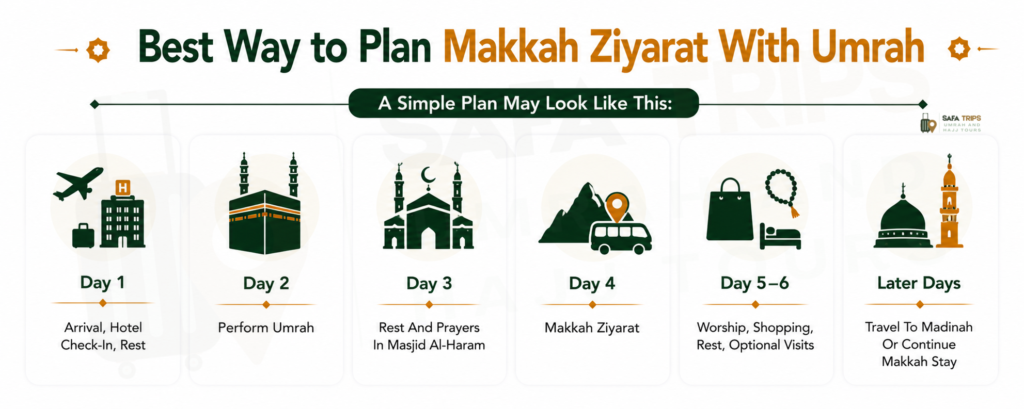
Best Way to Plan Makkah Ziyarat With Umrah
The best way to plan Makkah Ziyarat is to match it with your complete Umrah schedule. Your flight arrival, hotel check-in, Umrah timing, rest day, prayer schedule, and Madinah transfer should all be considered.
A simple plan may look like this:
| Day | Suggested Activity |
|---|---|
| Day 1 | Arrival, hotel check-in, rest |
| Day 2 | Perform Umrah |
| Day 3 | Rest and prayers in Masjid al-Haram |
| Day 4 | Makkah Ziyarat |
| Day 5–6 | Worship, shopping, rest, optional visits |
| Later Days | Travel to Madinah or continue Makkah stay |
This plan can change based on package duration. Short-stay pilgrims may need a tighter schedule. Long-stay pilgrims can plan Ziyarat more comfortably.
SafaTrips helps you balance worship, rest, Ziyarat, and travel movement.
Who Should Book a Guided Makkah Ziyarat Tour?
A guided Makkah Ziyarat tour is useful for many pilgrims, especially those who are visiting for the first time.
It is helpful for:
| Pilgrim Type | Why Guided Ziyarat Helps |
|---|---|
| First-time pilgrims | They understand the places better |
| Families | Easier route and timing management |
| Senior citizens | Safer and more comfortable planning |
| Women-only groups | Better coordination and support |
| Large groups | Organized movement |
| Children | Simple learning experience |
| Busy pilgrims | Saves time and confusion |
A guided Ziyarat tour helps you avoid route confusion and gives meaning to the places you visit.
Makkah Ziyarat Booking Tips
Before booking Makkah Ziyarat, pilgrims should ask clear questions. This avoids confusion later.
Ask about the route, vehicle type, timing, number of places covered, whether it is shared or private, and whether hotel pickup is included. Also ask if the route is suitable for senior citizens.
Do not choose only the cheapest option. A very low-cost option may mean poor timing, crowded vehicle, unclear route, or weak support.
SafaTrips focuses on practical planning. Our goal is to give pilgrims a peaceful journey with clear information, not confusion.
Quick Makkah Ziyarat Checklist
| Checklist Item | Done |
|---|---|
| Confirm Ziyarat date and time | ☐ |
| Check prayer timings | ☐ |
| Carry water | ☐ |
| Wear comfortable shoes | ☐ |
| Carry medicines | ☐ |
| Keep hotel card | ☐ |
| Charge phone | ☐ |
| Keep children close | ☐ |
| Avoid unnecessary climbing | ☐ |
| Follow guide instructions | ☐ |
| Respect local rules | ☐ |
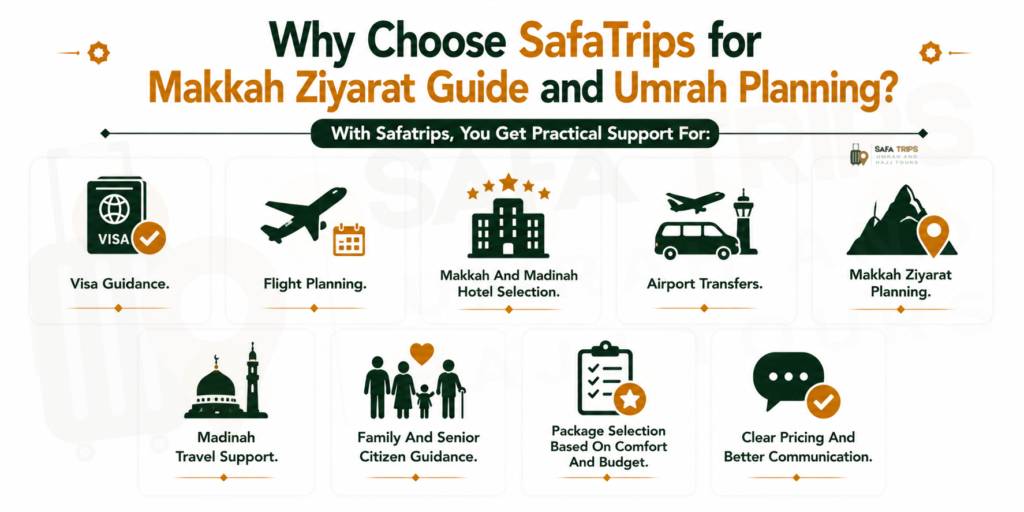
Why Choose SafaTrips for Makkah Ziyarat Guide and Umrah Planning?
SafaTrips is built for Indian pilgrims who want simple, clear, and guided Umrah planning. We understand the needs of families, elders, women travellers, groups, and first-time pilgrims.
Makkah Ziyarat is not just about visiting places. It is about understanding Islamic history with respect. It should be planned in a way that protects your health, time, worship, and peace of mind.
With SafaTrips, you get practical support for:
- Visa guidance.
- Flight planning.
- Makkah and Madinah hotel selection.
- Airport transfers.
- Makkah Ziyarat planning.
- Madinah travel support.
- Family and senior citizen guidance.
- Package selection based on comfort and budget.
- Clear pricing and better communication.
You can start with a value Umrah plan from ₹1,09,990, choose better comfort at ₹1,34,990, or select dedicated support from ₹1,65,990. Higher comfort and luxury options are also available based on hotel distance, travel season, and service level.
For complete travel planning, you can explore our Umrah Packages from Delhi if you are travelling from North India, or choose a customized plan based on your departure city.
A Peaceful Makkah Ziyarat Starts With Good Planning
Makkah Ziyarat can become one of the most meaningful parts of your Umrah journey when it is planned properly. It helps you understand Islamic history, see important places, and reflect on the sacrifices connected with the early days of Islam.
But Ziyarat should never become rushed, tiring, or confusing. Pilgrims should choose the right timing, suitable transport, safe route, and guided support. Families and senior citizens should be extra careful with walking, climbing, heat, and long outdoor stops.
SafaTrips helps Indian pilgrims plan Makkah Ziyarat with care, comfort, and clear guidance. From basic packages to deluxe and luxury options, our team helps you choose a journey that matches your budget, health, and spiritual needs.
FAQs
What is Makkah Ziyarat?
Makkah Ziyarat means visiting important Islamic and historical places in and around Makkah. These places may include Jabal al-Noor, Cave Hira, Jabal Thawr, Jannat al-Mualla, Mina, Arafat, Muzdalifah, Masjid Aisha, and other meaningful sites.
Is Makkah Ziyarat compulsory for Umrah?
No, Makkah Ziyarat is not compulsory for Umrah. Umrah has its own rituals. Ziyarat is an optional visit that helps pilgrims learn more about Islamic history and connect spiritually with important places.
How long does Makkah Ziyarat take?
A common Makkah Ziyarat tour takes around 3 to 5 hours. The time depends on hotel location, traffic, number of places, group size, weather, and whether the tour is shared or private.
Can senior citizens do Makkah Ziyarat?
Yes, senior citizens can do Makkah Ziyarat if the route is planned carefully. They should avoid climbing Jabal al-Noor or Jabal Thawr if they have health issues. A vehicle-based Ziyarat plan is better for elderly pilgrims.
Which are the most famous Ziyarat places in Makkah?
Some famous Makkah Ziyarat places are Jabal al-Noor, Cave Hira, Jabal Thawr, Jannat al-Mualla, Masjid Aisha, Mina, Arafat, Muzdalifah, and Masjid al-Jinn.
Is Cave Hira easy to climb?
No, Cave Hira can be difficult to climb. The path is steep and tiring. It is not suitable for everyone, especially senior citizens, people with knee pain, heart problems, breathing issues, or low stamina.
Can SafaTrips arrange Makkah Ziyarat?
Yes, SafaTrips can help arrange Makkah Ziyarat as part of your Umrah package. We help with route planning, transport, timing, family needs, senior citizen comfort, and complete Umrah travel support.
What is the starting price for SafaTrips Umrah packages?
SafaTrips Umrah packages start from ₹1,09,990 for a 15 Days Value Plan. Deluxe comfort starts from ₹1,34,990, and dedicated travel expert support starts from ₹1,65,990. Prices may increase based on travel month, airline fare, hotel distance, room sharing, transport, meals, and Saudi service updates.
Should I book private transport for Makkah Ziyarat?
Private transport is better for families, senior citizens, children, and pilgrims who want flexible timing. Shared transport is suitable for budget-conscious pilgrims who are comfortable moving with a group.
What should I carry during Makkah Ziyarat?
Carry water, comfortable footwear, medicines, hotel card, phone, charger or power bank, light snacks, ID copy, and basic personal items. Keep your bag light and avoid carrying unnecessary items.